


"The hand that rocks the cradle rules the world."
This is a reference to the poem by North American author William Ross Wallace, which inspired the movie title "The Hand That Rocks the Cradle." The central idea of the work is simple: it illustrates the invisible control that someone exerts over destiny based on things that seem small or secondary, but in fact, exert great influence over the final result.
In civil construction, the exact same thing happens. While attention is usually focused on equipment, concrete, schedules, and major executive decisions, there is a silent element that influences practically everything that happens on a construction site: field data.

Every log entry made by a supervisor, engineer, foreman, or clerk seems like a simple operational record. However, when this information is collected in a structured way and scales up, it becomes the foundation for strategic decisions, measurements, planning, productivity control, cost management, and even the company's defense in audits, claims, and contractual disputes.
In other words, whoever controls the construction data also controls the quality of the decisions. And whoever makes better decisions achieves better results.
Whoever controls construction data controls the results
Every project generates a massive amount of information: hours worked, team productivity, equipment usage, weather conditions, photographic records, measurements, occurrences, schedule deviations, and hundreds of daily operational logs, often on paper.
Most companies collect data but do not produce knowledge. In most cases, the majority of the potential knowledge from information is lost, piling up in archives, screenshots, and stored messages, waiting for something to happen.
Furthermore, in many companies, this data is still born on paper through handwritten forms, which are later transcribed into spreadsheets and then redistributed to different systems or departments. This process consumes time, significantly increases the risk of typos, creates discrepancies between databases, and causes the same information to be recorded multiple times by different people. In the end, the company spends more time consolidating information than using it to make decisions.
The field is the only reliable source of information
As digital transformation progresses, two new challenges arise:
1. Retyping information from paper into a digital environment is hard work and leads to errors
The digital transformation of civil construction begins when information is recorded directly where facts happen: the field. When data is collected right at the work front using mobile devices, IoT, telemetry, or other digital means, it automatically feeds the company's databases, eliminating intermediate steps of transcription, consolidation, and retyping.

Data captured at the source preserves context and can be linked to information such as date, time, location, photographic records, and other evidence to increase reliability and traceability. This significantly reduces administrative rework, minimizes errors resulting from interpreting handwritten records, and ensures that all departments work with original information.
Working with data collected directly at the source improves the quality of the information that feeds indicators, dashboards, and corporate systems. The result is continuous interaction between the field and management, causing the site to monitor more and type fewer logs.
The second challenge:
2. Integrating data and software that do not talk to each other can be difficult...
If information from different processes and systems is scattered across different platforms, it will require massive resources to organize and consolidate. For example, the schedule is in Project or Primavera, but field notes and photos are in messaging apps. Another example: financial data remains in the ERP, but financial measurements are in Excel spreadsheets.
The truth is that each department has its own database, its own indicators - its own version of reality. To understand why a certain activity was delayed or why productivity dropped, you will have to gather information from different, sometimes incompatible sources. This can turn simple decisions into slow processes that require prior consolidation and verification of data. In other words, you have a new problem. Electronic DCRs, field records, production logs, equipment control, time clocks, BIM platforms, telemetry, sensors, and photo logs produce valuable information, but only generate intelligence when their information is cross-referenced in an organized and reliable way.

The good news is that currently, this cross-referencing can be done in an integrated environment via APIs, eliminating redundancies, preserving history, and centralizing sources of information for the entire company. And if it's not possible to focus on a single source of records, at least let them be few and speak to each other. This reduces rework, increases the reliability of indicators, and creates the conditions for much more comprehensive analyses.
Business Intelligence depends on data quality
Modern dashboards and Business Intelligence tools are extremely powerful, but their efficiency depends directly on the quality of the information they receive.
There is no reliable indicator when data arrives incomplete, is typed more than once, or has versions distributed across different spreadsheets and systems.
Therefore, before building charts and indicators, it is necessary to ensure that information is collected directly at the source, preserved throughout the entire project lifecycle, and integrated into a single database. Only then can managers visualize trends, identify deviations quickly, and transform operational records into strategic decisions.
When the project ends, knowledge is worth even more
Although the completion of a project represents the end of a direct cycle, it does not mean that the knowledge produced during its execution also ends. If spreadsheets remain stored on personal computers, photos stay on team cell phones, documents are archived in physical folders, and most of the information is no longer consulted, then every new project will start almost from scratch, every single time.
This cycle is broken as the company accumulates executed projects and stores knowledge for future ventures through lessons learned, calibration of productivity rates, causes of delays, supplier performance, and execution, histories reused in planning the next projects.
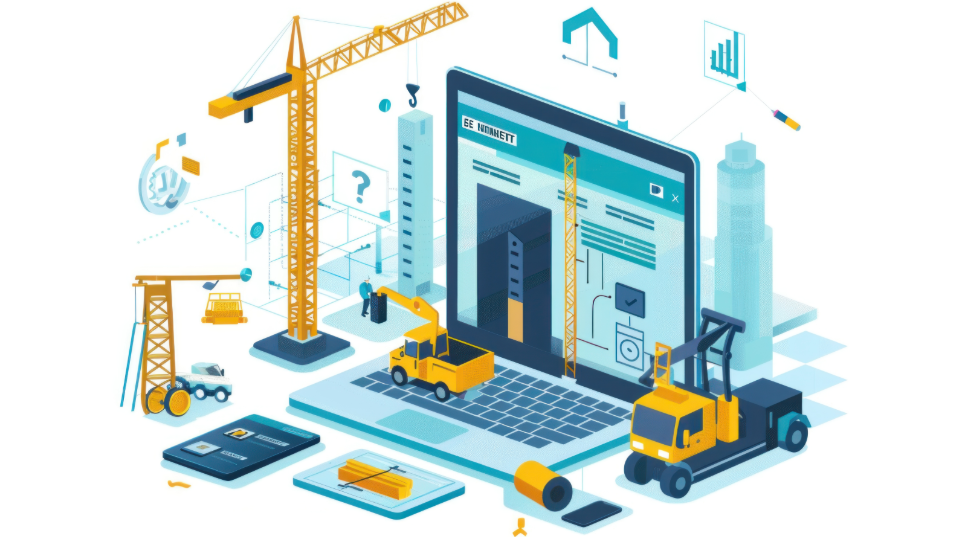
Building intelligence is building corporate memory
The true digital transformation of civil construction does not happen just because paper is replaced by a screen. Retyping information from paper is not a digital revolution. Digital transformation begins when information is recorded directly where the facts happen. When field information is valued and transformed into knowledge for the entire company, each new project stops starting from scratch and is planned based on previous experiences, real indicators, and information consolidated over the years.
Better decisions always start with better data.
Last updated on 16/07/2026
Find Out More
Technical Presentation
REQUEST DEMO
Fill in the fields and one of our specialists will contact you to schedule the best day and time.