


Structure of a Good DWR
Traditionally, general contractors include information in their daily reports that makes sense within the context of the project currently managed. However, it is important to consider that the CDR must also be aligned with the Construction Order Book, which follows a structure defined by resolutions of the Federal Council of Engineering and Agronomy (CONFEA), such as Resolution 1.094, for example.
Therefore, your CDRs must provide an accurate picture of what is happening in the project, while also being aligned with the contract and current legislation.
Below are the sections, what we at RDOWEB call channels, that a good CDR should include.
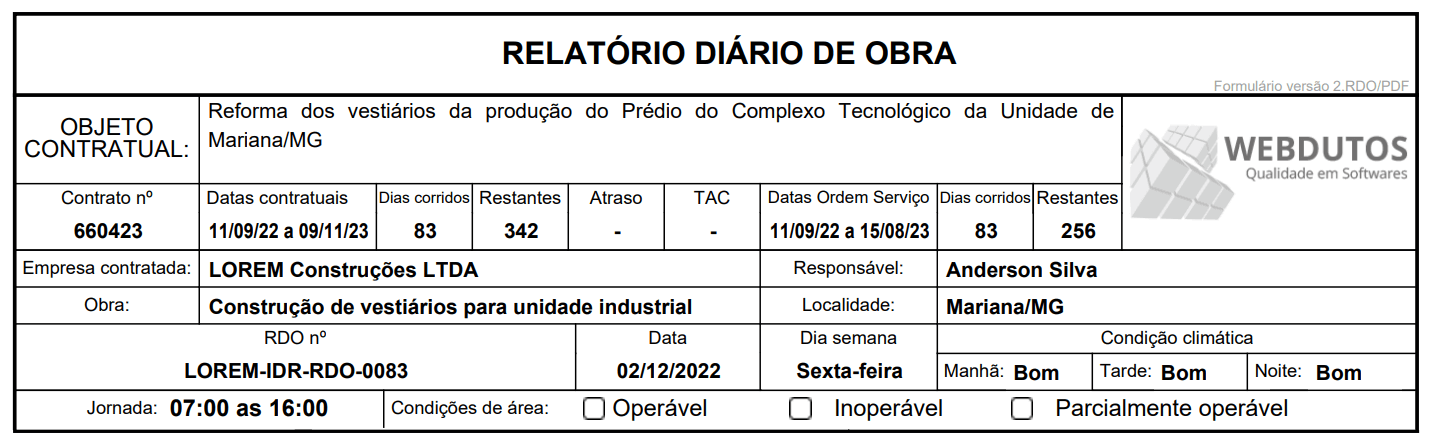
Cover, or header
It identifies stakeholders, the project description or scope, contractual deadlines, responsible parties, work schedule, the date, and the CDR identifier. In other words, this section records the main information about the project.
Tasks and Activities
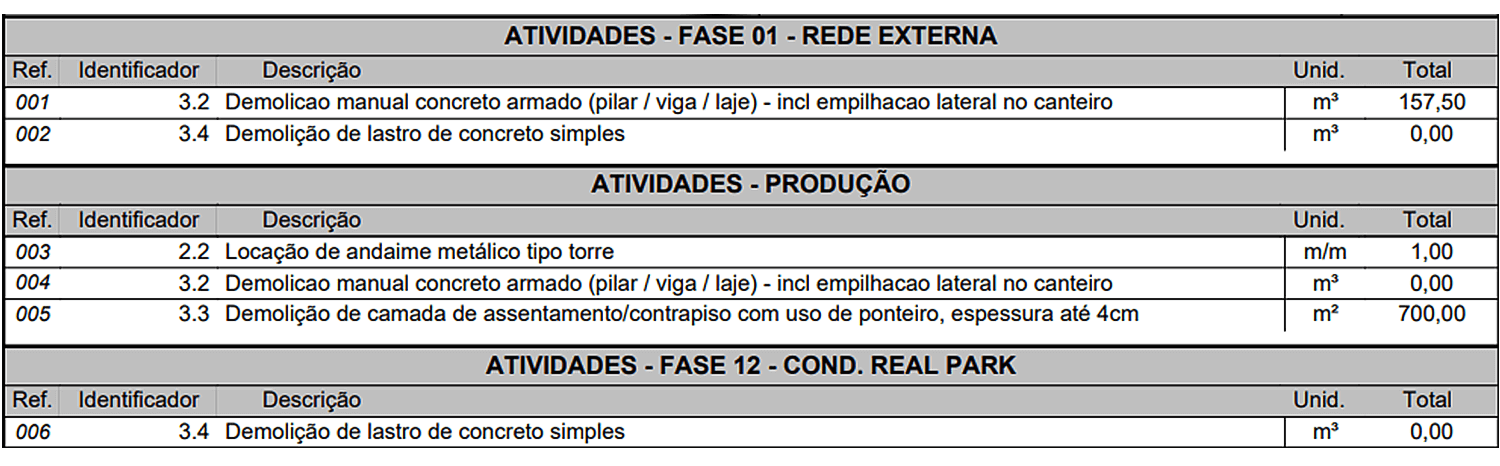
This channel must be connected to project planning. You achieve this by preloading a list of activities derived from the Work Breakdown Structure (WBS) or the project schedule. It is not necessary to load the entire WBS of the project; you can group it on 1 or 2 levels to make it more streamlined.
As such, the person records what was performed by selecting tasks from a predefined list. Afterwards, they can add complementary notes, attach photos, and record progress (executed quantities).
Weather Conditions
In this channel, you should record the general weather conditions that occurred at your project site. Note that we are not talking only about rain. In projects that use cranes, for example, wind can be a determining factor. Others, such as piers, need to monitor tide tables.
Although this type of record is relatively simple, remember that this is an uncontrollable variable and sometimes highly impactful. Therefore, always use data from a reliable source, such as Brazil’s National Institute of Meteorology (INMET), a dedicated weather station, or at least a properly installed bubble rain gauge at the site.

Occurrences and relevant events
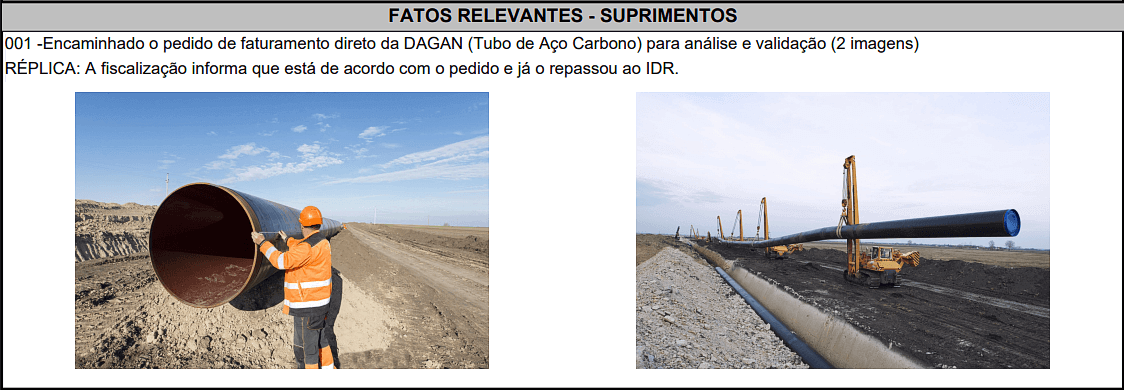
Communication between parties takes place through this channel. Field incidents and any project-related events (impactful or not) are recorded here. This channel also stores replies and counter‑replies from inspectors or the end client, organized chronologically as if they were a conversation displayed on a timeline.
The workforce logs, when properly recorded, provide valuable information on labor costs, estimates, punctuality, safety, and project compliance. It is also possible to infer productivity indexes by cross‑referencing this information with the activity channel.
Workforce
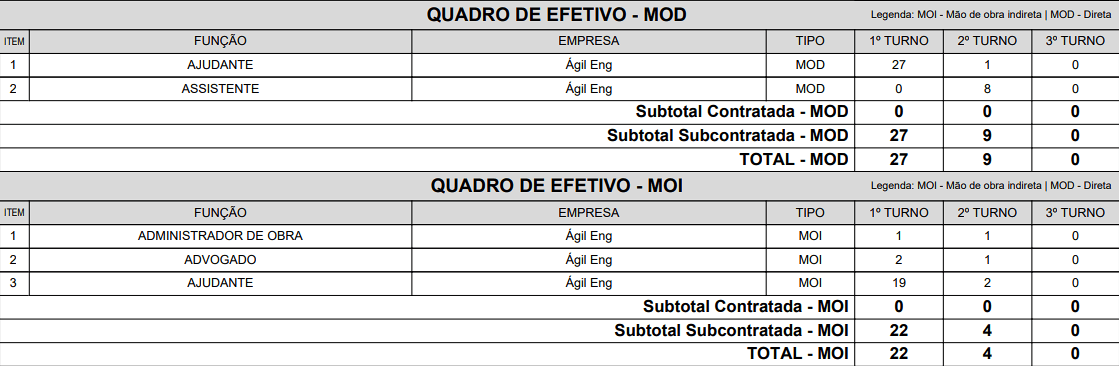
The workforce logs, when properly recorded, provide valuable information on labor costs, estimates, punctuality, safety, and project compliance. It is also possible to infer productivity indexes by cross‑referencing this information with the activity channel.
However, accurately recording this data can be time‑consuming and labor‑intensive. To address this, RDOWEB integrates with turnstiles and time clocks, automatically collecting data. If your project does not use turnstiles, you can still load data by importing information between CDRs or from Excel spreadsheets.
Equipment and tools
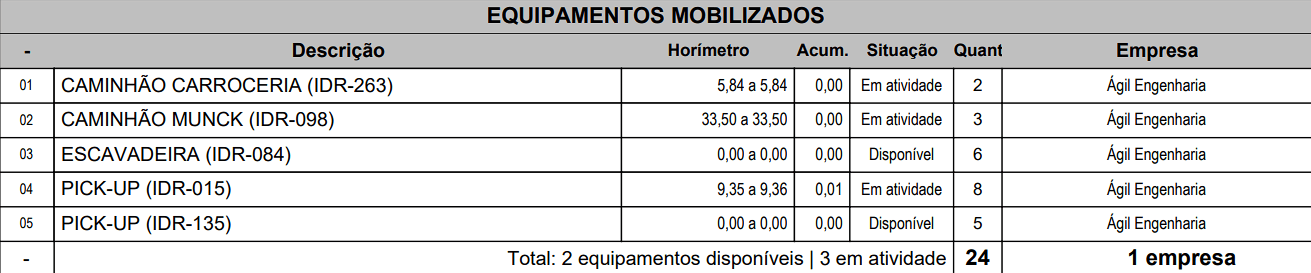
Every daily report should contain records of equipment usage throughout the day. This type of information usually helps coordinate service schedules for machines and equipment, providing a general view of their use in the project. More efficient usage, as well as knowing when and where it is more economical to lease certain types of equipment, depends on these records.
Stoppages
Although records in this channel almost always indicate potential delays, a good CDR should include downtimes and interruptions even if they do not impact the schedule. Delays here should follow the same assumptions used in the project budget. For example, if the project was budgeted based on hourly calculations, interruptions should be recorded in full hours, avoiding logging minutes.
Also avoid discussing costs, blame, or whether the event is claimable, describing only what occurred.

Accidents
Safety must be everyone’s primary goal, and a good CDR must mandatorily include information whenever incidents occur. Even when a separate accident report is formally presented, you are still required to report it in your CDR. This channel should record workplace accidents or significant incidents, even if briefly.

Footer and signatures
Although the Construction Daily Report is technically considered a record (records are valid with only one signature), it is good practice for both parties to sign each report. Some projects also collect signatures from project management companies, wrapping up the document with three signature fields.
Here, it is important that the signatories have proper authority of representation to avoid disputes.
