

Demystifying the Cloud
You have probably heard a lot about the cloud and how it is revolutionizing the way business is done today. But what the cloud is - and more importantly - how your company can take advantage of it, are still questions with a considerable margin of doubt.
In this article, we will comprehend what cloud computing is and how it can affect your work.
So, what is the cloud?
Let’s start with definitions.
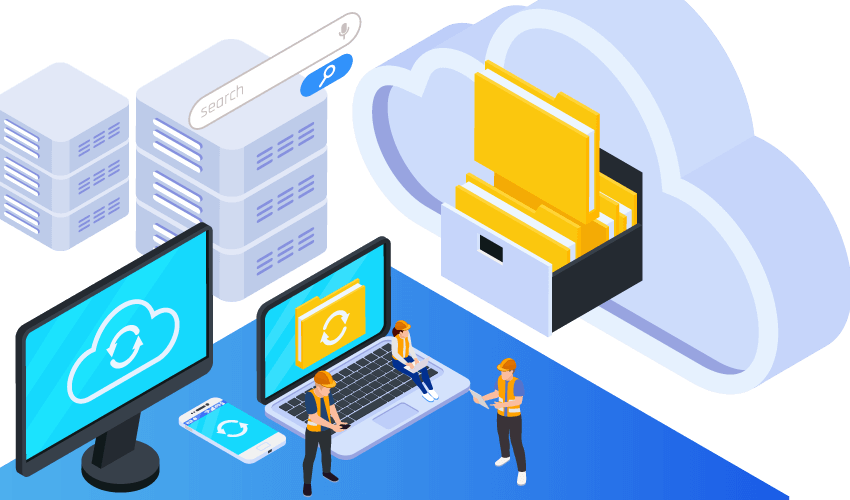
Cloud, or cloud computing, is a term used to describe computing resources - such as memory and processing - shared over the internet among applications (or programs). These resources are used to perform part of the work that was previously done exclusively by software installed on the user’s machine.
The term “cloud” has been in use since 2006, but it became popular when IBM began promoting IBM SmartCloud in its advertising campaigns in 2011.
The birth of the cloud
In the previous model, corporate computing relied on a corporate network with multiple personal computers (PCs) connected to a local server. Most work was performed individually on each PC using licensed software. The results were then saved on local hard drives, and backups were performed by IT staff through the internal network.
The evolution of this ecosystem created demand for faster processing and greater PC memory, forcing the entire system to evolve to support more complex software and to back up the massive amounts of data produced.
This growth cycle naturally required significant capital and investment in powerful computer network systems, exponentially increasing storage and processing capacity. As a result, network systems became so efficient that they ended up being underutilized, creating excess capacity.
At this point, companies such as Amazon and IBM realized that their high‑speed, high‑capacity servers and networks could be partitioned. This made it possible to offer surplus resources to meet the computing needs of other companies and organizations. The surplus capacity, storage, and processing power could then be sold as marketable commodities.
And thus, the cloud was born.

Different types of cloud
Today, within the cloud concept, there are different types of options, but the three most common are:
- Software as a Service (SaaS) - An application that is hosted and maintained on a remote server and accessed via the web;
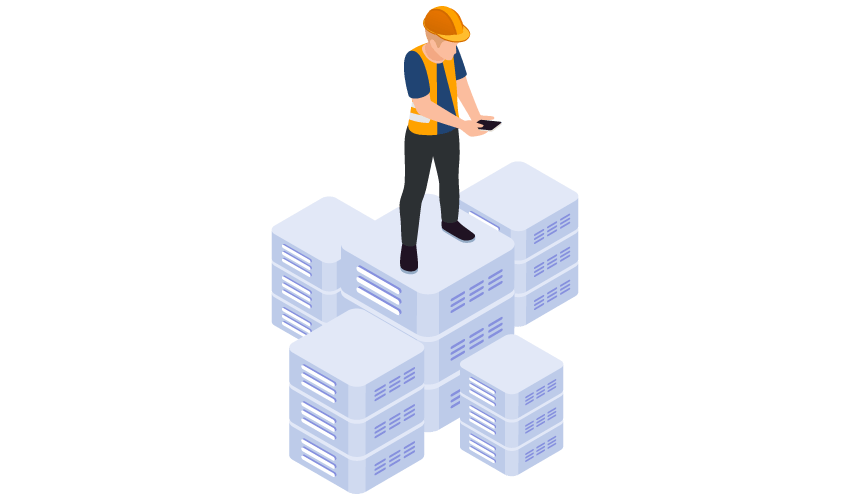
- Infrastructure as a Service (IaaS) – Replacement of on‑premises hardware with resources in an external data center, accessed via the internet and billed based on shared resource usage;
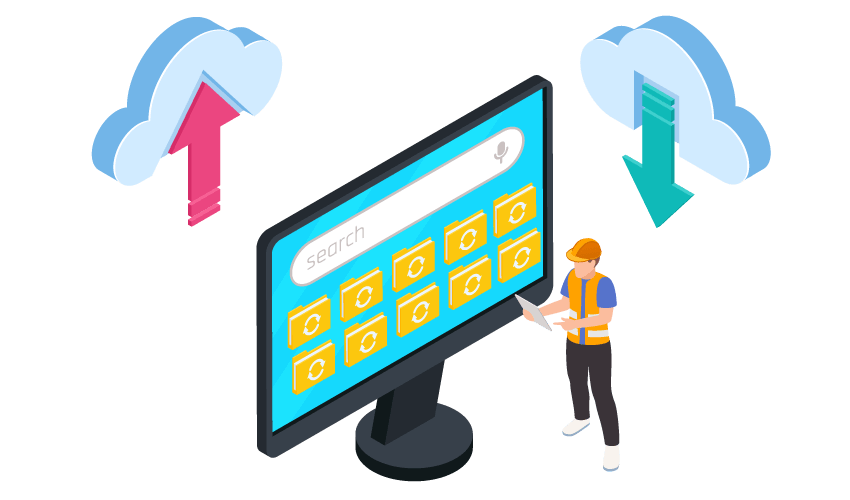
- Data as a Service (DaaS) – storage and access to data through a remote server.
The cloud and its usefulness
If you have been paying attention so far, you are probably starting to see how cloud computing can simplify access to more technology without requiring your own IT department or having to make significant capital investments in licenses or equipment.
This means that now, you can use powerful applications by paying for usage without purchasing a license (As a Service). One of the benefits of the “as a service” model is that you typically pay as you use it. The high upfront investments of the past have become variable costs, allowing small companies to access the same resources as large enterprises.
It also means that you can do your work from anywhere in the world.
Your network, which was once local, has become global.
Security concerns
Every general contractor in our country has developed some form of exclusive know-how and often feels insecure about adopting cloud technologies, believing they will lose control over a competitive advantage. While differentiators are important, it is not necessary to fall behind to reap the benefits that cloud computing offers. One only needs to look at other industries with similar—or even stricter—information requirements, such as federal government and healthcare systems.
At this point, the question to ask is: “what is so sensitive about our data that our company is not willing to leverage the cloud?”
Focus on what you do best
Companies such as Microsoft, Google, and Amazon invest significant time and energy to meet the security, scalability, and availability requirements of their cloud computing services. Make no mistake: if you are in the construction industry, the amount of resources, time, and commitment required to build and maintain proprietary solutions at the same level as these companies simply does not pay off.
If you have been in this sector long enough, you certainly know companies that spent years developing their own software and later abandoned those efforts. This usually happens when it becomes clear that there are greater benefits in focusing funds and resources on core strengths such as engineering, design, management, and construction management - not software.
The same logic applies to anything that provides little strategic value and delivers a better ROI when outsourced to the cloud.
Is the cloud right for me?
As a rule, obtaining answers to a few simple questions can help guide you on this matter: