

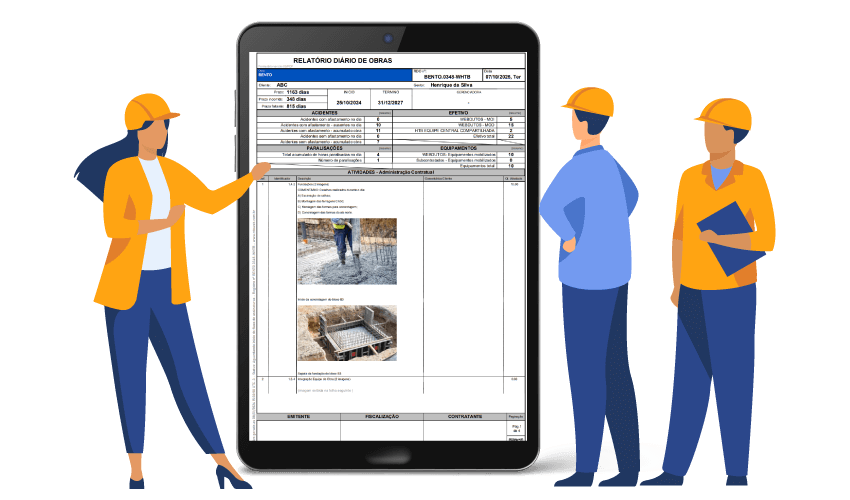
Why should I make CDRs?
Construction projects are often chaotic and fast‑paced environments, which can lead to significant disorganization. The key to accurately tracking progress on construction sites is to use a methodology capable of recording, transforming, and retaining daily information about activities, resources, deadlines, and unfavorable conditions at the construction site.
The purpose of this article is to show you the advantages of construction supervision based on accurate and complete Construction Daily Reports (CDRs). Keep reading to learn how to make and manage this document so that it achieves its true purpose.
Going beyond simple record-keeping
In the usual scenario of Brazilian engineering, recording what is being executed in a project is the responsibility of the general contractor. Sometimes contractors use management reports (monthly, biweekly, or weekly), compiling field information that serves both as a record and as a monitoring tool. The idea seems good, as it allows two things to be done in a single operation: recording what was executed during the period and keeping track of progress in a simplified way.
In fact, this works well until the day your client disagrees with what is recorded.
The problem with this methodology is that management reports essentially result from the effort of a person in charge of analyzing and summarizing data to produce the final document. In other words, they represent a human interpretation of what happened in the project. Even with well‑defined criteria for producing management reports, the quality of the document will still depend directly on this person’s ability to collect and analyze data.
I am not saying that you should stop issuing management reports. On the contrary, management reports are important for any general contractor with a mature management process. However, if the owner has an issue the project, the general contractor, or seeks to impose withholdings, a simple management report will hardly stand as proof that the contractor fulfilled the contract terms.
In cases like this, you will need to provide evidence for the data in your management report, and this data must be in the shape of properly controlled records in order to have legal validity. This is the role of the Construction Daily Report (CDR), which includes all relevant information for each day of a construction project.
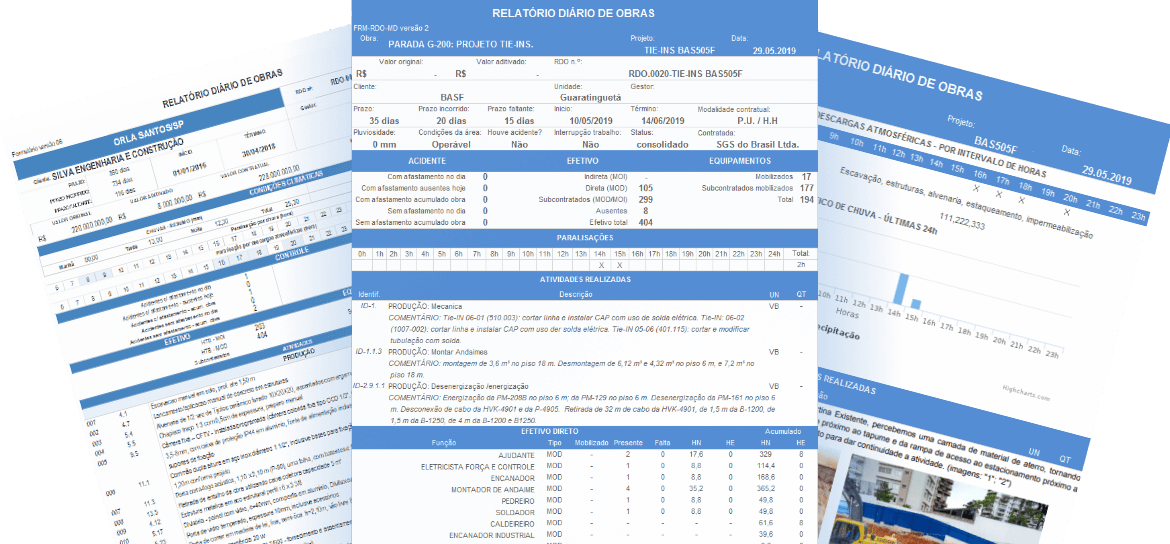
The importance of RDO
Although the contract is the most important document in a project, it is still a static document that defines only the basic terms and conditions to be followed. It does not record the nuances of the construction site, nor the real obstacles in a construction project.
The Construction Daily Report (CDR), on the other hand, provides details about the site and the work while also delivering important documentation to assist stakeholders. In addition, a well made CDR can even highlight contractual issues. For example, a contract may outline a schedule which daily reports show is not being actually followed.
So, is it enough to simply issue CDRs and the problem will be solved, right?
Answer: Not quite.
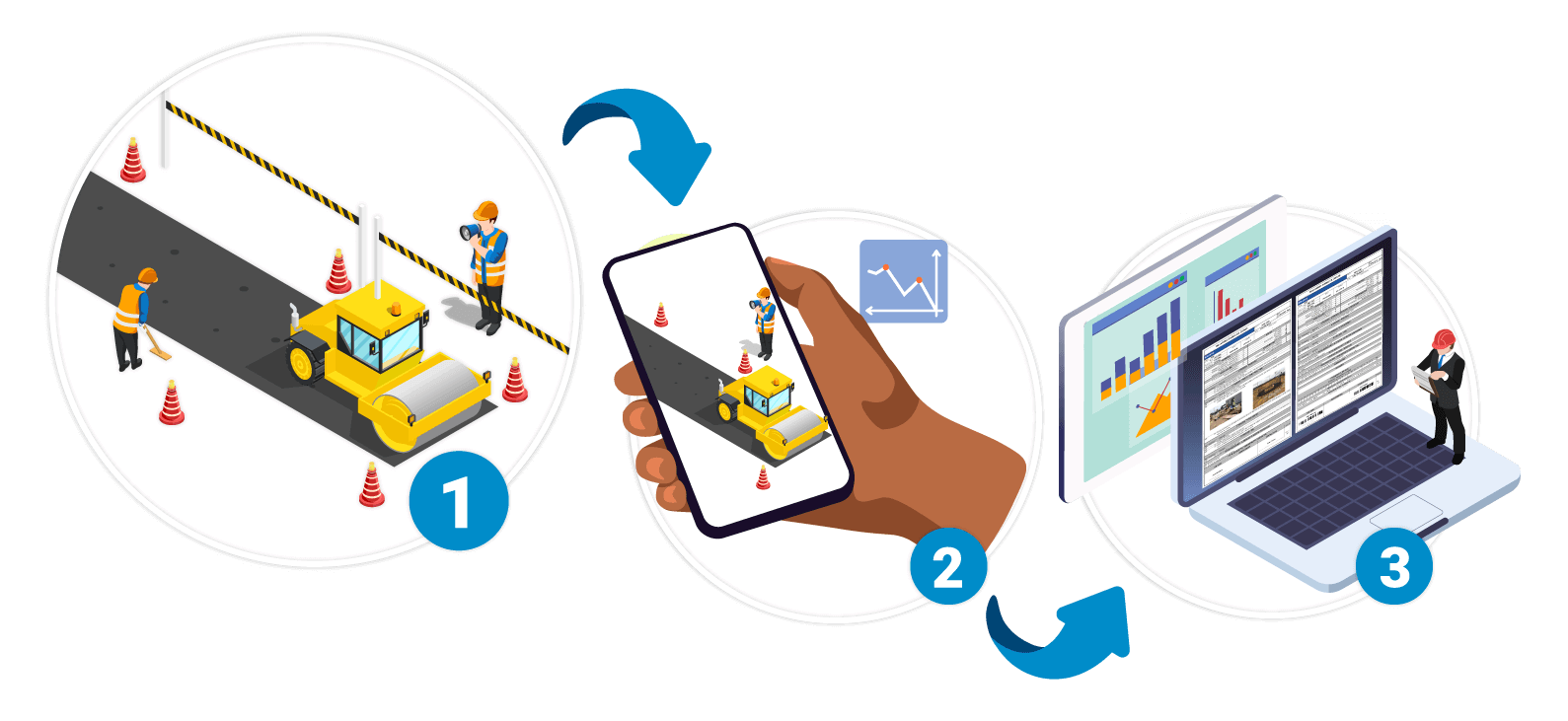
The problem is that issuing high-quality CDRs daily can be tedious and sometimes quite demanding. Manually noting the situation of the construction site, weather conditions, date and time, executed work (or not executed), workforce, and other important factors consumes people’s already scarce time and makes reports difficult to produce.
However, this can be solved by using software so that issuing reports is as automated as possible. A modern platform such as RDOWEB uses a mobile application in offline mode to collect data and photos, imports data from different days, and integrates with access turnstiles and weather stations, making the task of collecting and recording data much simpler.
The benefits
Some construction companies consider CDRs to be a simple formality. However, when done correctly, CDRs show the project’s transformation from start to finish. They connect stakeholders who do not see the site daily and may not be aware of the challenges involved in the project.
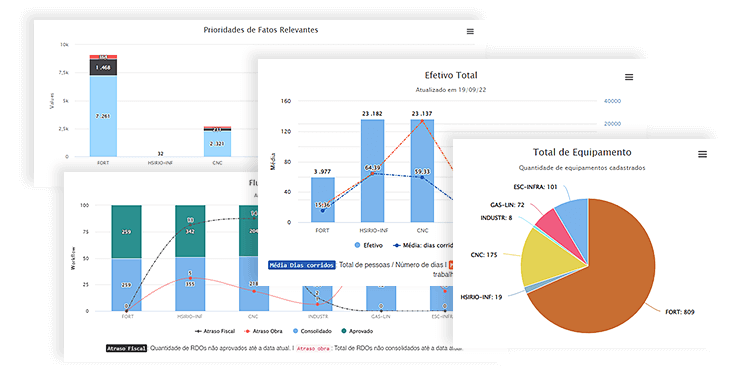
In addition, recorded data can be analyzed to better understand the project, prevent delays, or analyze circumstances that led to such delays. Stakeholders can also compare cost estimates with actual values. Even if the information cannot be used in the original project, it can still be used to improve future estimates.
Therefore, a good CDR is a performance record that helps answer questions about why delays or unexpected costs occur. It is also a record of the resources used, the workforce involved, what was done, the materials used, and much more.
In legal scenarios, the CDR serves to prove compliance with contractual requirements or the occurrence of unforeseen events.
In summary, a good CDR helps all the involved parties understand a project’s performance, progress, and productivity. These reports tell the story of the project, listing failures and opportunities, acting as the project’s historians.
Conclusion
Although the process of writing your CDRs daily may seem tedious, the benefits of completing one for each day of a project far outweigh the difficulties of writing it.
After generating enough reports to establish a consistent record of your project’s progress, you will begin to see patterns and opportunities for improvement that you likely would not notice otherwise. You may discover that you order excess materials or lease equipment for longer than necessary. If your CDR shows inefficient machine usage, you may consider switching to equipment leasing.
By cutting maintenance costs and allocating payments only for the days you actually need a machine, you are likely to save money and streamline your workflow.
But beyond identifying opportunities and anticipating potential problems, you will also be creating a reliable and evidential record of the work performed on your project.