
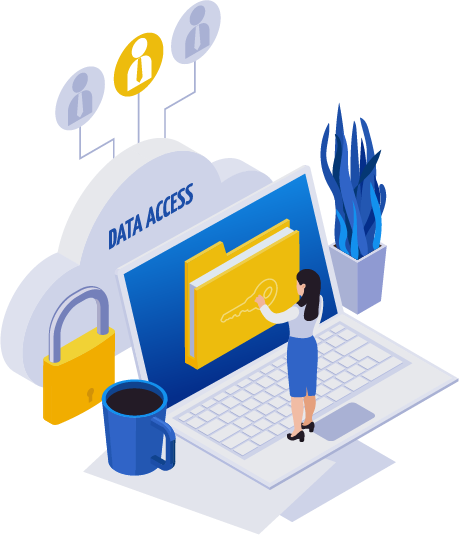
DATABOOK: client data
The RDOWEB User License Agreement provides one of the most critical aspects in contracting software services (SaaS): the commitment to data portability and final delivery of digital assets.
This is also known as “data sovereignty” and guarantees that the client owns the information, a critical concept in engineering and contract management. In the context of RDOWEB, this means that, even after a project is closed, the data will be transferred to the client, including delivery on physical media for offline consultation (databook).
The transfer consists of sending everything users recorded on the platform, such as DWRs; workforce records; occurrences; photos and digital signature envelopes, which will remain accessible to the client.
This feature addresses four main points:
1. CLAIMS: Legal Certainty and Claims Management
Engineering projects often face legal or administrative disputes that may arise years after the project is completed.
- Unalterable History
Owning the data allows the company to prove events, weather conditions or third-party interference that impacted the schedule.
- Evidence
Since RDOWEB uses electronic signatures and auditable records, sovereignty over these files ensures that the company has at hand the evidence needed for its defense or for requesting an economic-financial rebalancing.
2. COMPLIANCE: Conformity and Auditing
The infrastructure and civil construction sectors are rigorously audited by regulators, investors or internal audits. The points of attention here are:
- Traceability
The assurance that the company can respond to audits at any time, without depending on the software vendor’s operational continuity to access historical technical compliance records, such as PBQP-H standards.
- Knowledge Continuity
The creation of a documentary "as-built" of the project management, allowing future maintenance or expansions to consult what was recorded during execution.
3. VENDOR LOCK-IN: Technological Independence
Data sovereignty prevents technological entrapment, also known as vendor lock-in, which occurs when a company cannot migrate systems or end a service because its data is held hostage by a piece of software.
The main focus of this pillar is:
- Portability
To guarantee that the database belongs to the client. This gives the client the freedom to migrate to other solutions or archive the information on its own servers, according to its IT policies.
4. BENCHMARKING: Knowledge Management
In modern engineering, data from past projects are valuable assets for planning new ones.
- Productivity Analysis
Keeping ownership of the data allows the planning team to analyze productivity rates, histograms and reasons for stoppages in past projects to budget new contracts more accurately.
- Big Data and AI
With ownership of structured data, the company can feed its own data analysis models to predict risks in future projects.
In short, in engineering, information is a fixed asset. RDOWEB’s commitment to the DATABOOK feature turns the software from a simple temporary repository into a strategic asset-protection tool for the general contractor, project management firm or owner.
Find out more
Clients




























































Technical Presentation
REQUEST DEMO
Fill in the form and one of our specialists will contact you to schedule a meeting the best day and time.